
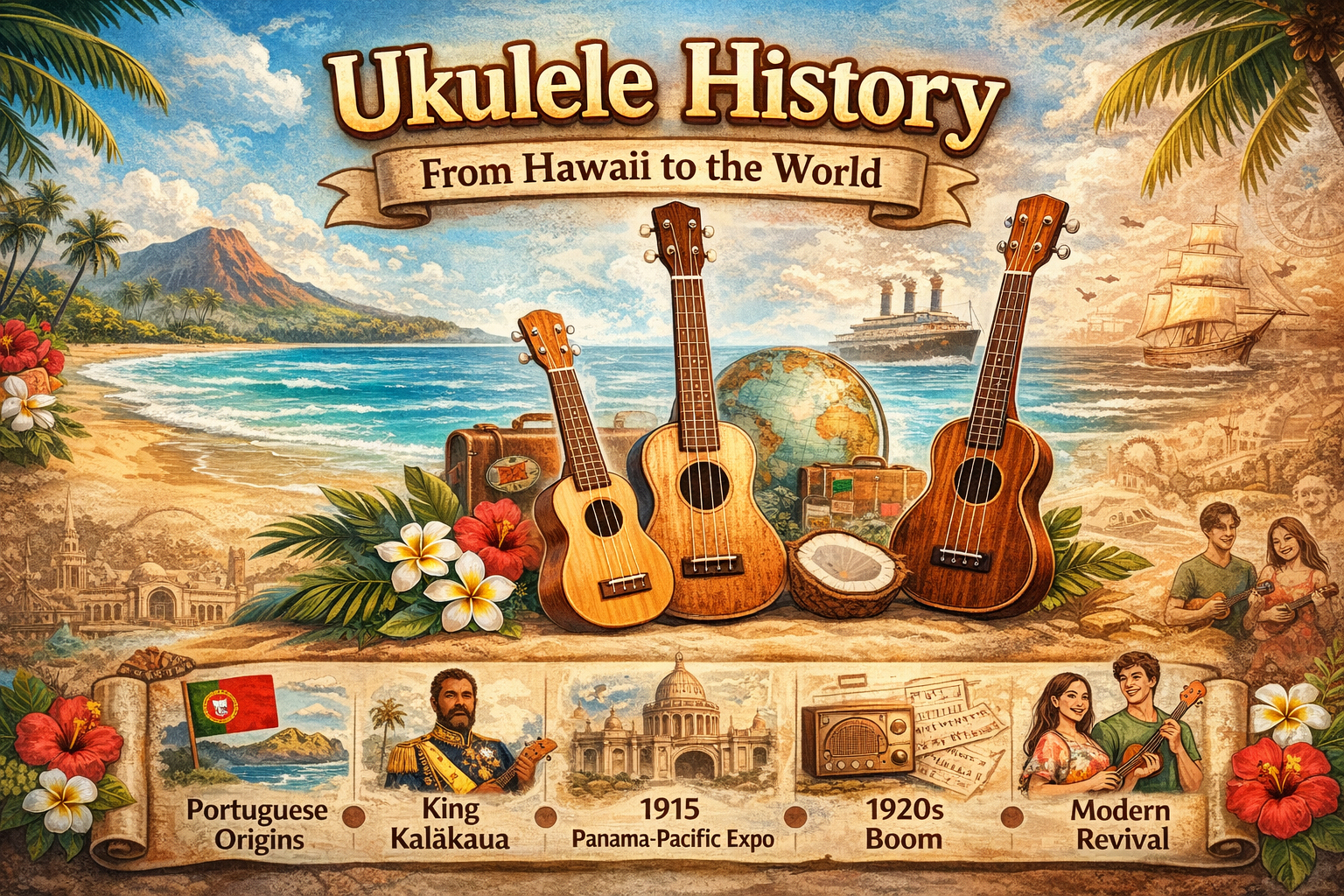
The ukulele is one of the most cheerful and recognizable musical instruments in the world. With its bright sound, small size, and easy learning curve, the ukulele has captured the hearts of musicians everywhere. But behind this simple instrument lies a fascinating cultural journey. Understanding ukulele history reveals how a small Hawaiian instrument became a global music icon.
In this article, we will explore the origins of the ukulele, how it evolved over time, and why it remains popular today.
The Origins of the Ukulele
The story of the ukulele begins in the late 19th century in Hawaii. While many people believe the instrument is purely Hawaiian, its roots actually trace back to Portugal.
In 1879, Portuguese immigrants from the island of Madeira arrived in Hawaii to work on sugar plantations. Among them were skilled craftsmen and musicians who brought small guitar-like instruments such as:
-
The Machete
-
The Cavaquinho
-
The Braguinha
These instruments had four strings and a bright, lively sound. Hawaiian locals quickly became fascinated by the music they produced.
How the Ukulele Got Its Name
One of the most interesting parts of ukulele history is the origin of its name.
The word “ukulele” roughly translates to “jumping flea” in Hawaiian.
There are two popular explanations for this name:
-
The quick movement of a musician’s fingers across the strings looked like a jumping flea.
-
The lively and playful sound of the instrument reminded listeners of something energetic and quick.
Regardless of the exact reason, the name stuck—and the ukulele soon became a symbol of Hawaiian culture.
The Role of King Kalākaua
A key moment in ukulele history happened during the reign of King David Kalākaua, often called the “Merrie Monarch.”
King Kalākaua strongly supported Hawaiian music, dance, and cultural traditions. He loved the sound of the ukulele and promoted it during royal gatherings and celebrations.
Because of his support:
-
The instrument became widely accepted in Hawaiian society.
-
It started appearing in traditional Hawaiian music.
-
Skilled craftsmen began building ukuleles locally.
This royal influence helped transform the ukulele from a foreign instrument into a true Hawaiian cultural symbol.
Early Ukulele Makers
Several Portuguese craftsmen played a major role in shaping the early ukulele.
The most famous early builders included:
-
Manuel Nunes
-
Augusto Dias
-
José do Espírito Santo
These luthiers began crafting ukuleles using local Hawaiian wood, improving the design and sound quality.
Their instruments laid the foundation for the modern ukulele we know today.
The Ukulele’s Rise in the United States
The next major chapter in ukulele history came in 1915.
During the Panama–Pacific International Exposition in San Francisco, Hawaiian musicians performed for large audiences. Visitors were fascinated by the joyful sound of the ukulele.
This event sparked a huge interest in Hawaiian music across the United States.
Soon after:
-
Ukulele sales skyrocketed
-
Music schools began teaching ukulele
-
Sheet music featuring the instrument became popular
By the 1920s, the ukulele had become a mainstream instrument in American music.
Ukulele Popularity in the 20th Century
Throughout the 20th century, the ukulele appeared in many music styles.
It became especially popular during:
The Jazz Age (1920s)
Jazz musicians loved the ukulele because it was:
-
Portable
-
Easy to play
-
Great for rhythm accompaniment
Hollywood Films (1930s–1950s)
Movies featuring Hawaiian themes helped spread the instrument worldwide.
Post-War Music
After World War II, the ukulele remained a popular instrument for beginners and families.
Many people learned their first chords on a ukulele before moving on to guitar.
The Ukulele Revival
The ukulele experienced another major revival in the late 20th century and early 21st century.
Artists and musicians began rediscovering its charm.
One of the biggest moments in modern ukulele history came when Hawaiian musician Israel Kamakawiwoʻole released his famous medley of “Somewhere Over the Rainbow / What a Wonderful World.”
His gentle ukulele playing introduced the instrument to a new generation.
Soon after, many artists began using the ukulele in pop, indie, and folk music.
Types of Ukuleles
Over time, several types of ukuleles have developed. Each offers a slightly different sound and playing style.
Soprano Ukulele
The soprano is the smallest and most traditional ukulele.
-
Bright sound
-
Classic Hawaiian tone
-
Great for beginners
Concert Ukulele
The concert ukulele is slightly larger.
-
Fuller sound
-
More room for finger movement
-
Popular among intermediate players
Tenor Ukulele
The tenor produces a deeper tone.
-
Larger body
-
Louder sound
-
Preferred by professional musicians
Baritone Ukulele
The baritone is the largest type.
-
Deep guitar-like tone
-
Different tuning from other ukuleles
Why the Ukulele Is So Popular
Even after more than a century, the ukulele continues to grow in popularity.
There are several reasons for this.
Easy to Learn
The ukulele has only four strings, making it much easier to learn than many other instruments.
Portable
Its small size makes it perfect for travel, performances, or casual playing.
Happy Sound
The bright and cheerful tone of the ukulele instantly lifts people’s mood.
Affordable
Compared to many musical instruments, ukuleles are relatively inexpensive.
The Ukulele in Modern Music
Today, the ukulele appears in many music genres, including:
-
Pop music
-
Indie music
-
Folk
-
Hawaiian music
-
Acoustic performances
Many popular artists have used the ukulele in their songs, helping introduce it to new audiences around the world.
Social media platforms have also played a huge role in spreading ukulele culture. Thousands of musicians now share tutorials, covers, and original songs online.
The Future of the Ukulele
Looking at ukulele history, it is clear that the instrument has survived many musical trends and continues to evolve.
Modern innovations include:
-
Electric ukuleles
-
Travel ukuleles
-
Unique wood designs
-
Custom handmade instruments
As music continues to change, the ukulele remains a beloved instrument for beginners and professionals alike.
Conclusion
The story of ukulele history is a remarkable journey that began with Portuguese immigrants in Hawaii and grew into a worldwide musical phenomenon.
From royal Hawaiian courts to modern global music stages, the ukulele has proven that even a small instrument can have a huge cultural impact.
Today, its cheerful sound continues to inspire musicians of all ages. Whether you are a beginner learning your first chords or an experienced performer, the ukulele remains one of the most joyful instruments ever created.










Leave a Reply