
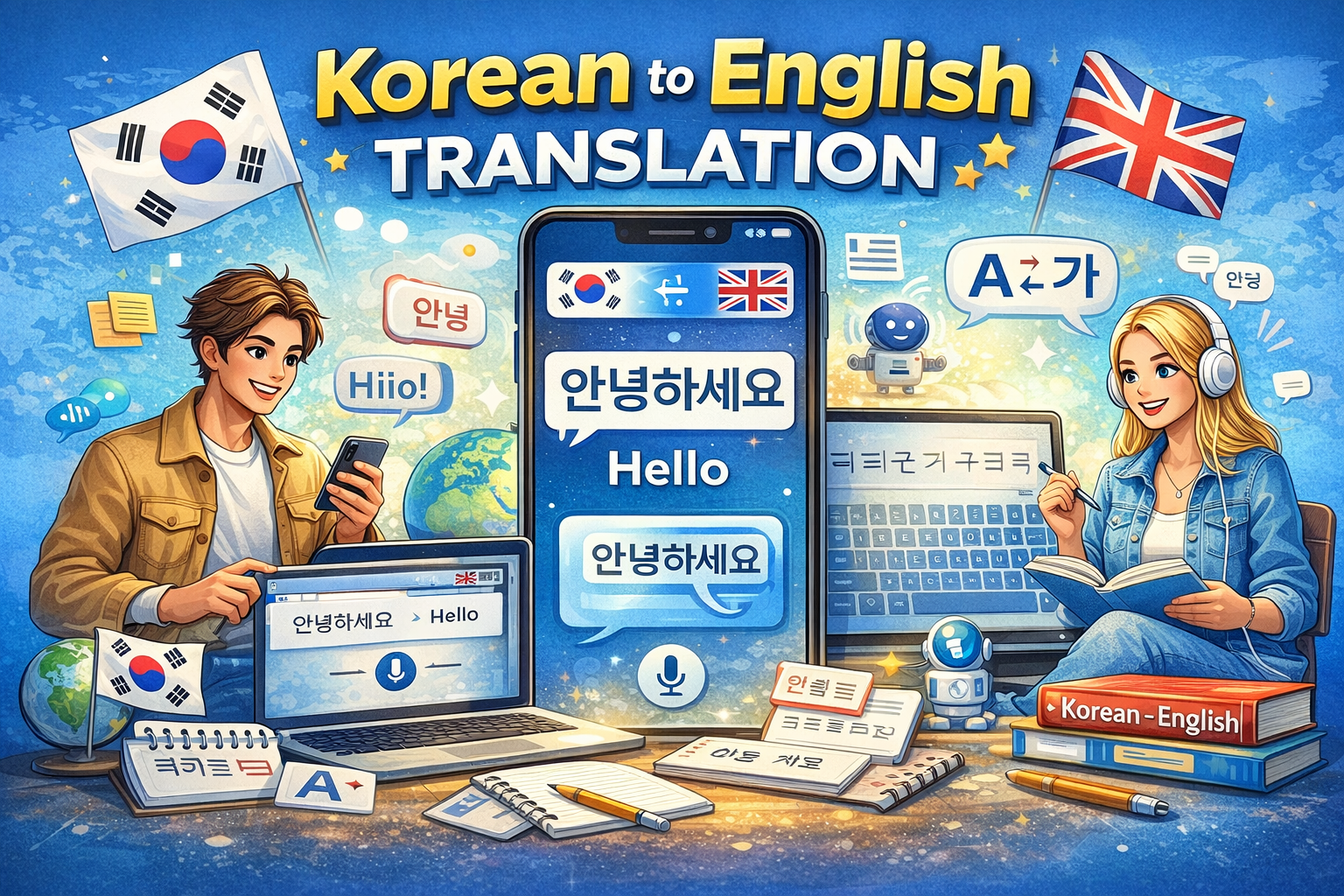
Learning how to translate Korean to English has become increasingly important in today’s global digital world. With the rise of Korean entertainment, business, and culture, millions of people now need reliable translation tools and techniques to understand Korean text and conversations.
From K-dramas and K-pop to business communication and travel, Korean-to-English translation helps bridge the language gap between two major global audiences.
In this guide, we will explore the best ways to translate Korean into English, useful tools, and tips to improve translation accuracy.
Why Korean to English Translation Is Important
The demand for Korean-to-English translation has grown rapidly because of the global influence of South Korean culture. Movies, music, and technology companies from South Korea are reaching international audiences, which increases the need for translation.
Some common reasons people translate Korean to English include:
-
Understanding Korean dramas and movies
-
Translating Korean websites or documents
-
Communicating with Korean friends or colleagues
-
Learning the Korean language
-
Translating social media posts
Popular Tools for Korean to English Translation
Many online tools can translate Korean text into English instantly. Some of the most widely used translation platforms include:
-
Google Translate
-
Papago
-
Microsoft Translator
These tools allow users to translate text, speech, and even images containing Korean writing.
Google Translate
Google Translate is one of the most popular translation tools worldwide. It supports many languages and offers features such as voice translation and camera translation.
Papago
Papago, developed by Naver, is particularly strong for Korean translations because it is designed with Korean language structure in mind.
Microsoft Translator
Microsoft Translator provides accurate translation for professional and casual use, especially for business communication.
Common Challenges in Korean to English Translation
Translating Korean into English is not always easy because the two languages have different grammar structures and cultural expressions.
Some challenges include:
Different Sentence Structure
Korean sentences often place verbs at the end, while English sentences typically place verbs in the middle.
Honorific Language
Korean has a system of honorifics used to show respect. Translating these correctly into English can be difficult.
Cultural Expressions
Some Korean phrases have meanings tied to cultural context that may not translate directly into English.
Tips for Better Korean to English Translation
If you want more accurate translations, follow these tips:
1. Use Simple Sentences
Short and clear Korean sentences usually translate better.
2. Check Multiple Translation Tools
Comparing translations from different tools can help you find the most accurate meaning.
3. Understand Context
A word can have different meanings depending on the situation.
4. Learn Basic Korean Vocabulary
Knowing common Korean words helps you verify whether the translation is correct.
Korean Language Basics
The Korean language uses a unique alphabet called Hangul, which was created in the 15th century to make reading and writing easier for the Korean people.
Hangul consists of simple characters that combine to form syllables. Learning Hangul can greatly improve your ability to translate Korean text into English.
Use Cases for Korean to English Translation
Translation between Korean and English is used in many areas:
Education
Students studying Korean rely on translation tools to understand textbooks and language lessons.
Business
Companies working with Korean partners need translation to communicate effectively.
Travel
Tourists visiting South Korea often translate menus, signs, and directions.
Entertainment
Fans of Korean pop culture translate lyrics, subtitles, and online content.
Future of Korean to English Translation
With advancements in artificial intelligence, translation technology continues to improve. AI-powered tools are becoming more accurate and capable of understanding context and natural language.
This means Korean-to-English translation will become faster, easier, and more reliable in the future.
Conclusion
The demand for Korean to English translation continues to grow as Korean culture, business, and technology expand globally. Whether you are learning Korean, traveling, or simply enjoying Korean entertainment, translation tools can help you understand the language quickly.
By using trusted translation tools and learning some basic Korean language principles, anyone can improve their ability to translate Korean text into English effectively.











Leave a Reply